

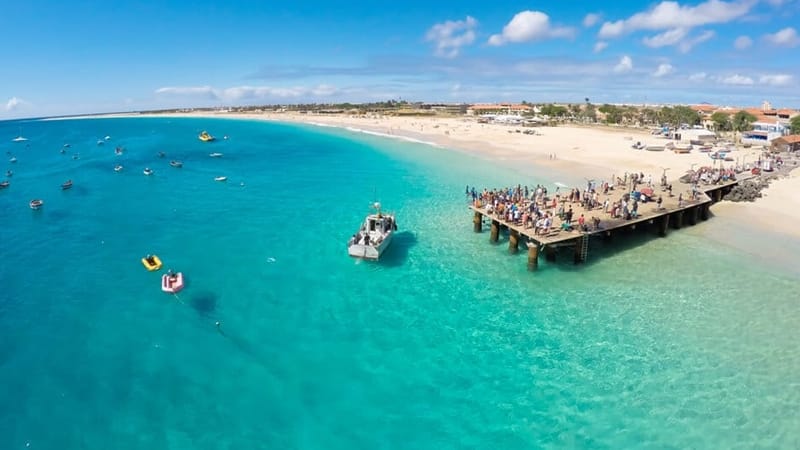
The archipelago of Cape Verde continues to consolidate its position as one of West Africa's most dynamic destinations, with positive economic indicators that contrast with the structural challenges that require immediate attention.
The Engine of Tourism: Data that Drives Business
According to statements made by Thierry Ligonnière, Chairman of the Board of Directors of Cabo Verde Airports, released by the Island Express, A recent study reveals impressive data on the economic impact of tourism: for every million dollars spent by tourists, 120 direct jobs are created. According to the same study, each group of 13 tourists arriving in the country generates one new job.
Air traffic figures corroborate this trend: the volume of passengers has already exceeded by 24% the records of the pre-pandemic period, indicating a robust and sustainable recovery in the sector.
Source: Expresso das Ilhas, statements by Thierry Ligonnière, CEO of Cabo Verde Airports
Chain Business Opportunities
This growth in tourism creates a multiplier effect that transcends the hotel sector. For every influx of visitors, opportunities arise in:
The Demographic Challenge: Social Security Reform
Alongside the optimism for tourism, the Island Express reports on warnings from the International Monetary Fund (IMF) about the sustainability of Cape Verde's pension system. The ageing of the population combined with a falling birth rate could force the country to raising the retirement age, This will have an impact on the dynamics of the labour market and the social costs of companies.
Source: Expresso das Ilhas, based on IMF warnings
Implications for Entrepreneurs
For those running businesses in Cape Verde, this scenario presents two strategic vectors:
S&D in the Business Ecosystem
In this context, professional business structuring is no longer a differential, but a necessity. Projects with the potential for public or private funding, such as those covered by the IMPULSIONA programme, These require robust business plans, rigorous feasibility studies and proper fiscal organisation.
S&D is positioning itself as a strategic partner in this transformation, accompanying entrepreneurs in the transition from ideas to sustainable companies.
Contents
Consolidated Growth with Nuances
Cape Verde's tourism sector has grown consistently in recent years. Forecasts for 2026 point to:
Impact on GDP and Tax Revenue
Tourism today represents a significant portion of Cape Verde's GDP. By 2026, it is expected to contribute to:
Here's the critical point: the greater the growth of the sector, the greater the supervision by the authorities. The DNRE has increased its auditing capacity in high-income sectors. Tourism companies are and will continue to be a priority target for tax checks.
If your company operates in this sector, tax compliance is non-negotiable.
The Context of Pressure for Reform
Cape Verde, like many African countries, is facing internal and external pressure to modernise its social protection and labour rights framework. The reforms expected in 2026 include:
Reinforced Labour Legislation
Expanded Social Security
Gender Rights and Inclusion
Contracting and Formalisation
Why Does It Matter to Your Business?
If your company has employees and in tourism, it's rare not to have these reforms affect you directly:
IRC - Corporate Income Tax
Rate: 25% on profits (plus any social defence contribution)
Applicable to: hotels, travel agencies, restaurants, tourist accommodation, tour operators.
Deductions Allowed (and Common Pitfalls)
Companies can deduct legitimate expenses. But the DNRE often rejects them:
Critical Council: Keep impeccable documentation. In tourism, tax auditors are especially sceptical about questionable deductions.
VAT on Tourist Services
Rate: 15% in Cape Verde
Important point: accommodation, catering and leisure services are subject to VAT. Many tourism companies make the mistake of:
The DNRE systematically checks the consistency between VAT paid, VAT received and declared turnover. If there are disparities, it means an audit.
Deductions and Incentives for Tourism Investment
Cape Verde offers some incentives for investment in tourism:
Many companies are unaware of these incentives or don't document them properly. A specialised tax audit can identify savings opportunities that are not being taken advantage of.
Tax Compliance in the Context of Reforms
With social reforms that can change personnel costs, it's critical:
Reinforced Accounting Obligations
The DNRE expects all the companies to keep it:
By 2026, more digitisation is expected. This means:
Companies that are not prepared for this will face operational difficulties and compliance risks.
Labour Compliance in the Context of Reforms
In addition to tax, there are labour obligations that will intensify:
Companies operating informally will face significant fines.
Risks of Non-Compliance
If your company is not compliant, the risks include:
1. Preventive Tax Audit
Don't wait for a DNRE audit. Carry out an internal audit (or hire a specialised consultant) to:
2. Correct structuring of labour contracts
Review all employment contracts for:
3. Planning personnel costs
With social reforms on the horizon:
4. Specialised consultancy
S&D Consultancy offers:
2026 will be a year of opportunity for tourism in Cape Verde, but also of increased regulatory scrutiny. Companies that prepare themselves, with impeccable documentation, tax compliance and a solid labour structure, will be better placed to grow smoothly.
Those who wait for problems before taking action will be in for unpleasant surprises.
Is your company ready? The time to act is now, not in 2026 when the DNRE comes knocking.
If you have any doubts about the tax and legal implications of the reforms, or if you want to carry out a preventive audit, S&D Consultancy is here to help.
📧 Contact us for a free consultation.
We specialise in tax and labour compliance in Cape Verde. We know the local reality, the real challenges facing Cape Verdean companies and the opportunities that many miss due to lack of planning.
Don't put it off. Your tax future will thank you.

 English (UK)
  Português (AO90)
  Français