

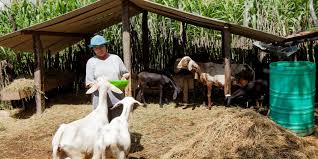
In Cape Verde's economic and social context, entrepreneurship has emerged as one of the main drivers of development. Animal husbandry, as a traditional activity, presents itself as a strategic opportunity for young entrepreneurs who wish to contribute to the country's food security and sustainable growth. However, this sector faces significant challenges, such as the scarcity of water resources, dependence on imports and the lack of effective policies, requiring innovative and well-structured approaches.
With a privileged location in the Atlantic and a growing economy, Cape Verde offers a favourable environment for the development of businesses linked to farming. Animal husbandry, integrated into sustainable practices and adapted to the archipelago's climatic conditions, can be a viable solution for boosting the local economy, generating employment and promoting the resilience of rural communities. In addition, government initiatives, such as the subsidy programme for drip irrigation systems, have sought to mitigate the effects of adverse conditions by facilitating access to technologies that increase agricultural and livestock productivity (Ministry of Agriculture and Environment).
This report aims to guide young Cape Verdeans interested in investing in the animal husbandry sector, identifying promising business models and providing information on resources and support institutions. Through detailed analysis, opportunities will be explored in areas such as sustainable livestock farming, the production of animal by-products and the integration of innovative technologies. This educational guide aims to enable young people to structure solid businesses in line with the needs of the market and the specific characteristics of Cape Verde.
Poultry farming, especially laying hens and broilers, is a viable opportunity for young entrepreneurs in Cape Verde. This type of business benefits from the high demand for eggs and chicken meat on the local market, as these are products that are consumed on a daily basis. A Upranimal - Rações de Cabo Verde LDA, for example, is a benchmark in the supply of day-old chicks and specific poultry feed, with a weekly production capacity of 25,000 meat chicks and 12,500 laying chicks (Upranimal).
Goat and sheep farming is a traditional activity in Cape Verde, with great potential for expansion, especially for the production of goat's milk and meat. These products are valued both on the domestic market and in gastronomic tourism. In addition, the production of artisanal cheese can be a lucrative complement.
Pig farming is a business opportunity with great potential in Cape Verde, considering the significant consumption of pork in the country. This type of farming can be developed on a small scale, using modern techniques to maximise productivity.
Rabbit farming is a little-explored activity in Cape Verde, but it has high growth potential. Rabbit meat is a healthy alternative that is easily accepted on the market and can be promoted as a premium product.
Despite structural and climatic challenges, cattle farming remains an important activity in Cape Verde, especially for meat and milk production. With the support of modern technologies and sustainable practices, this sector can be revitalised.
For all types of creation, it is essential for young entrepreneurs:
By exploiting these opportunities, young Cape Verdeans can contribute to the sustainable development of the livestock sector and the diversification of the national economy.
Water scarcity in Cape Verde is one of the biggest challenges facing the livestock sector. To mitigate this problem, it is essential to adopt water collection and storage technologies, such as cisterns and rainwater harvesting systems. These solutions can be implemented in rural areas with greater vulnerability to drought, such as Santiago and Santo Antão.
Young entrepreneurs can use the Ministry of Agriculture and Environment for information on technical and financial support programmes related to water management. In addition, the National Institute for Agricultural Research and Development (INIDA) promotes research projects to improve efficiency in the use of water resources in agriculture and livestock.
The high price of feed and other inputs is another significant obstacle. To face this challenge, farmers can opt for partnerships with local suppliers, such as Upranimal - Rações de Cabo Verde LDA, which offers specific feed for different types of animals.
In addition, costs can be reduced through the production of local fodder, such as the use of crops adapted to the arid climate, including cassava and sorghum. These practices can be complemented with technical training offered by government programmes, such as the Family Livestock Modernisation Programme, available at official website of the Government of Cape Verde.
Livestock theft is a growing concern for Cape Verdean farmers. To tackle this problem, the implementation of community surveillance systems and the use of modern technologies such as GPS tracking devices to monitor animals are recommended.
Young people interested in investing in this type of solution can seek support from initiatives such as Pro Empresa, which offers funding and technical assistance for innovative projects. Detailed information on these opportunities is available at Pro Empresa portal.
The development of value chains is crucial to increasing the sector's competitiveness. For example, in goat and sheep farming, the production of artisanal cheese can be integrated as a high added value product. This model can be replicated in other areas, such as rabbit meat production, which has the potential to become a premium product in the local and tourist market.
Entrepreneurs can obtain information on value-added practices through training offered by local and international associations. O IFC and the World Bank have also promoted projects to strengthen value chains in the livestock sector in Cape Verde.
The lack of technical training is one of the main obstacles to growth in the livestock sector. In order to overcome this barrier, it is essential that young farmers take part in training programmes offered by institutions such as INIDA and the National Secretariat for Climate Action.
These programmes include training in business management, animal husbandry techniques and sustainable practices. In addition, initiatives such as the Green and Blue Entrepreneurship Project offer mentoring and technical support for young entrepreneurs wishing to invest in the sector.
Young Cape Verdeans can turn to various sources of finance to start or expand their businesses in the livestock sector. Among the options available are:
Detailed information on these programmes can be found on the respective official portals, such as Pro Empresa website and ADB website.
The tourism sector in Cape Verde offers a unique opportunity for local farmers. Products such as artisan cheese, goat meat and goat's milk can be promoted as authentic gastronomic experiences for tourists.
Entrepreneurs can collaborate with hotels and restaurants on the more touristy islands, such as Sal and Boa Vista, to create business partnerships. In addition Investment Projects Portal provides information on how to attract investors to businesses related to tourism and livestock farming.
The adoption of modern technologies is essential to increase productivity and sustainability in the sector. Examples include the use of sensors to monitor animal health and digital management systems to optimise breeding processes.
Entrepreneurs interested in technological solutions can seek support from local startups and innovation programmes promoted by the Cape Verdean government. O Investment Projects Portal is also an excellent source of information on innovation opportunities in the sector.
Although the livestock sector in Cape Verde faces significant challenges, there are numerous opportunities for young entrepreneurs who want to invest in this area. With the support of government programmes, financial institutions and training initiatives, it is possible to overcome obstacles and contribute to the country's sustainable development.
Young Cape Verdeans interested in investing in the agricultural sector can benefit from specific programmes that promote entrepreneurship and innovation. These programmes offer funding, training and technical assistance to start or expand businesses in the sector.
Technical training is essential for the success of any agricultural business. Cape Verde has several institutions offering courses and workshops to train young entrepreneurs.
Access to finance is one of the main challenges facing young entrepreneurs in Cape Verde. However, there are various sources of finance available to support businesses in the agricultural sector.
The adoption of modern technologies can significantly increase the productivity and sustainability of agricultural businesses. Cape Verde has been promoting initiatives to integrate technological innovation into the sector.
The creation of partnership networks is fundamental to the success of agricultural businesses. These partnerships can include cooperatives, local associations and international organisations.
This set of resources and institutions provides a solid basis for young Cape Verdeans to invest successfully in the agricultural sector, contributing to the country's sustainable development.
The study identified several business opportunities in the animal husbandry sector in Cape Verde, particularly poultry, goats, sheep, pigs, rabbits and cattle. These business models have high growth potential due to domestic demand for products such as meat, milk and eggs, as well as the possibility of integration with the tourism sector. Creating added value, such as producing artisan cheese or promoting rabbit meat as a premium product, was also pointed out as an effective strategy for increasing the competitiveness and attractiveness of the businesses.
The main challenges facing the sector include water scarcity, high input costs and security in the field. However, solutions such as the adoption of efficient irrigation technologies, partnerships with local suppliers, and the use of tracking devices to prevent theft were suggested as ways to mitigate these problems. In addition, access to technical and financial support programmes, such as the Pro Company and Family Livestock Modernisation Programme, was identified as essential for training young entrepreneurs and reducing start-up costs.
To maximise the impact of these initiatives, it is recommended that young Cape Verdeans invest in technical training, participate in partnership networks and explore available sources of funding. Integration with tourism and the adoption of innovative technologies are crucial steps to ensure the sustainability and success of businesses in the livestock sector. In this way, this sector not only contributes to Cape Verde's economic diversification, but also promotes sustainable development and the creation of opportunities for new generations.

 English (UK)
  Português (AO90)
  Français