

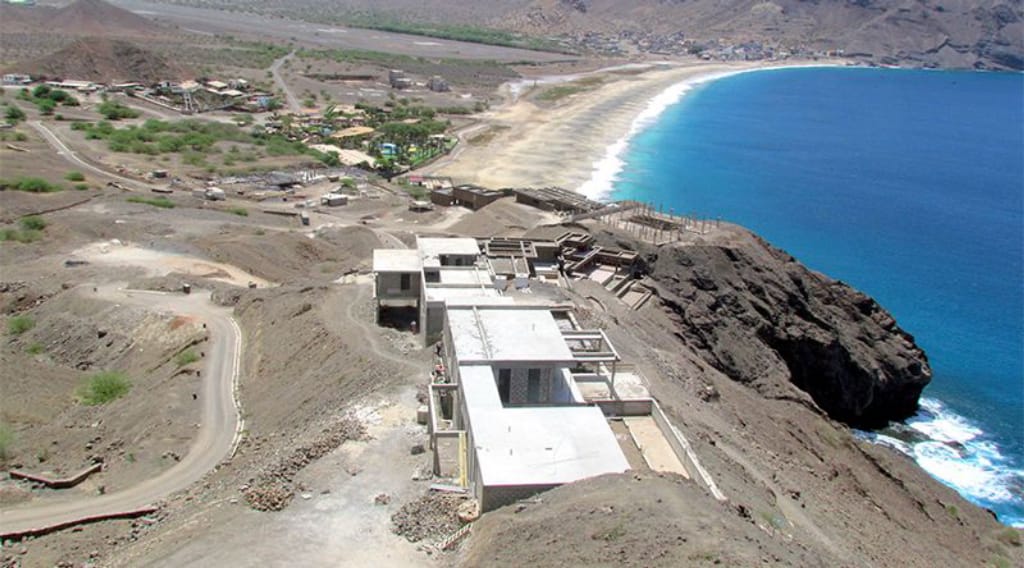
The Government of Cape Verde recently approved the Establishment Agreement with the company Tarafo Bay L02, Sociedade Unipessoal S.A., which is responsible for the development and operation of the tourism project St Peter’s Hills, located on the island of São Vicente. This investment, valued at 38.7 million euros, represents a significant milestone for the archipelago’s tourism and economic sectors. The decision was formalised through the Resolution No. 49/2025, published in the Official Gazette No. 50, Series I, 18 June 2025.
The São Pedro Hills project forms part of a broader strategy to promote private investment, with the aim of boosting the local economy, creating jobs and enhancing the island’s appeal to tourists. Its implementation involves the construction of modern and sustainable infrastructure, in line with national priorities for economic and environmental development. This type of initiative not only positions São Vicente as a competitive destination on the international market, but also fosters opportunities for local entrepreneurs, ranging from the provision of services to integration into tourism-related value chains.
The adoption of this convention reflects the Government’s commitment to creating a favourable business environment and attracting foreign capital, as highlighted in previous initiatives, including the São Vicente Special Economic Zone for the Maritime Economy (ZEEMSV). For Cape Verdean businesspeople, this project represents an opportunity for growth, whether through partnerships with foreign investors or through the expansion of local businesses that can benefit from the increase in tourist numbers and improvements to infrastructure.
This investment further bolsters confidence in São Vicente’s economic potential, cementing the island’s position as a strategic hub for the sustainable development of Cape Verde.
The São Pedro Hills project, valued at 38.7 million euros, represents a significant milestone in the development of tourism in São Vicente. The construction of eight luxury villas and 80 high-end apartments, set within the natural landscape of São Pedro Bay, reinforces the island’s appeal as a high-quality tourist destination. This type of investment not only improves the range of accommodation on offer, but also positions São Vicente as a competitive destination in the international luxury tourism market. (Armando Cunha, Cape Verde).
The development of luxury infrastructure attracts tourists with greater purchasing power, which can have a positive impact on the balance of payments through an increase in visitor spending. Furthermore, integrating architectural features into the local landscape promotes sustainable tourism, in line with global trends towards environmental conservation in the sector.
The implementation of the São Pedro Hills project contributes directly to job creation during the construction and operational phases. It is estimated that hundreds of jobs will be created, ranging from construction to maintenance, hospitality and tourism management. This impact is particularly significant in São Vicente, where unemployment has long been a concern. (Ministry of Finance).
Furthermore, the project encourages the empowerment of local communities by promoting training and professional qualifications in areas such as tourism, hotel management and luxury services. This investment in human capital strengthens the local population’s ability to play an active part in the island’s economic growth, reducing dependence on external labour.
São Pedro Hills acts as a catalyst for attracting further private investment, both domestic and foreign. The confidence generated by a project of this scale demonstrates São Vicente’s economic viability, encouraging other entrepreneurs to explore opportunities on the island. The favourable business environment, with tax incentives and accessible credit facilities, further reinforces this trend.
At the same time, the government has been promoting public-private partnerships to ensure the sustainability and effectiveness of investments. This model of cooperation is essential for large-scale projects, such as São Pedro Hills, as it allows risks and benefits to be shared between the public and private sectors.
The strategic location of São Pedro Hills in São Pedro Bay complements the government’s efforts to develop São Vicente’s maritime economy. Its proximity to the future Cruise Terminal and the Special Economic Zone for the Maritime Economy (ZEEMSV) creates synergies that could boost maritime tourism and related economic activities. (Government of Cape Verde).
Furthermore, the project benefits from improved logistics links on the island, including air and sea transport. This development makes it easier for tourists and investors to access the island, whilst reducing operating costs for local businesses.
São Pedro Hills has a significant impact on the day-to-day lives of Cape Verdean businesspeople. Increased demand for local services, such as the supply of building materials, catering, transport and entertainment, creates opportunities for micro, small and medium-sized enterprises (MSMEs). Furthermore, the project encourages the creation of innovative start-ups, particularly in areas such as digital tourism and personalised visitor experiences.
Tax incentives and access to specific lines of credit for the tourism sector also directly benefit local business owners, enabling them to expand their businesses and compete in wider markets. The confidence generated by large-scale projects, such as São Pedro Hills, reinforces the perception of economic stability, encouraging further investment and partnerships.
As the São Pedro Hills project is being implemented in two phases, it opens up significant opportunities for Cape Verdean entrepreneurs, particularly in the supply of local goods and services. The construction of luxury infrastructure, such as villas, high-end flats, swimming pools and restaurants, requires a robust and diversified supply chain. Local entrepreneurs can benefit by supplying building materials, furniture, interior design equipment and specialist finishing services.
Furthermore, the ongoing operation of the tourism development will create a constant demand for catering, maintenance, transport and waste management services. This scenario benefits micro, small and medium-sized enterprises (MSMEs), which can adapt quickly to the project’s needs. The involvement of local suppliers also helps to reduce logistics costs and strengthen the regional economy.
As São Vicente’s appeal to tourists grows, Cape Verdean entrepreneurs have the opportunity to invest in start-ups focused on digital tourism. Platforms offering personalised experiences, online bookings, virtual guides and concierge services can meet the growing demand from tourists visiting São Pedro Hills. This kind of technological innovation not only enhances the visitor experience but also positions Cape Verde as a modern and competitive destination in the global market.
Furthermore, digital tourism can be harnessed to promote local culture and heritage, creating new sources of income for business owners. The implementation of technological solutions, such as augmented reality and artificial intelligence, can enhance visits to tourist attractions and increase the length of time visitors spend on the island. (Inforpress)
Whilst the direct impact of São Pedro Hills is evident, there are also opportunities for Cape Verdean entrepreneurs to establish public-private partnerships (PPPs) in complementary projects. For example, the development of marinas, cruise terminals and infrastructure to support nautical tourism could be a natural extension of the project. São Vicente’s strategic location, combined with investment in luxury tourism, creates a favourable environment for initiatives that complement the São Pedro Hills project.
These partnerships may include the creation of cultural centres, leisure facilities and recreational activities that appeal to both tourists and local residents. The Cape Verdean government has already shown a willingness to engage in public-private partnerships (PPPs), which facilitates access to tax incentives and specific funding schemes for tourism projects. (Government of Cape Verde)
The implementation of the São Pedro Hills project also highlights the need to train and upskill the local workforce, creating opportunities for entrepreneurs operating in the education and training sector. Companies specialising in courses in hospitality, hotel management, languages and luxury services can meet the growing demand for qualified professionals in the tourism sector.
Furthermore, training initiatives can be developed in partnership with the government and international organisations, ensuring that local workers have access to high-quality training programmes. This investment in human capital not only benefits the entrepreneurs who run the courses, but also strengthens the competitiveness of the Cape Verdean workforce. (Ministry of Finance)
Cultural tourism is a growing sector in Cape Verde, and the São Pedro Hills project could act as a catalyst for local entrepreneurs wishing to explore this sector. The creation of products and services that promote Cape Verdean culture – such as crafts, music, dance and cuisine – can attract tourists interested in authentic and personalised experiences.
Entrepreneurs could, for example, develop cultural itineraries that include visits to traditional villages, craft workshops and musical performances. Furthermore, selling local products in shops and markets near São Pedro Hills could generate additional income and promote the economic sustainability of local communities. (Academia.edu)
The São Pedro Hills project, valued at 38.7 million euros, is a concrete example of how private investment can be channelled to promote sustainable tourism in Cape Verde. The construction of luxury infrastructure, such as high-end villas and apartments, is in line with environmental conservation practices, blending harmoniously into the natural landscape of São Pedro Bay. This approach not only attracts tourists with greater spending power but also minimises environmental impacts, contributing to long-term sustainability.
Furthermore, the redevelopment of São Pedro beach, with a budget of 3 million euros, demonstrates the project’s commitment to environmental conservation and responsible tourism. This investment includes the creation of outdoor leisure areas and the implementation of practices that promote the sustainable use of natural resources.
The São Pedro Hills project aims to increase São Vicente’s accommodation capacity through the construction of 80 flats and 8 luxury villas. This quantitative and qualitative increase in the supply of accommodation is essential to meet growing tourist demand, particularly in the luxury segment. Diversifying the range of accommodation on offer also creates opportunities for local entrepreneurs working in the hospitality sector, such as providers of catering, maintenance and transport services.
Unlike the initiatives already described in previous reports, this point highlights how an increase in accommodation capacity can directly benefit Cape Verdean entrepreneurs by creating a steady demand for complementary services. This scenario favours micro, small and medium-sized enterprises (MSMEs), which can adapt quickly to new opportunities. (Government of Cape Verde)
The São Pedro Hills project is expected to create 66 direct jobs, as well as generating indirect opportunities in sectors such as construction, tourism and retail. This impact on the labour market is particularly significant for Cape Verde’s young people, who face challenges relating to unemployment and a lack of skills.
Furthermore, the project could encourage the creation of vocational training programmes in areas such as hotel management, hospitality and luxury services. Local entrepreneurs could take advantage of this opportunity to set up training centres or offer specialised courses, thereby helping to upskill the workforce and boost the competitiveness of the tourism sector.
The impact of São Pedro Hills on the local economy goes beyond the creation of direct jobs. The implementation of the project requires a robust supply chain, creating opportunities for local businesses involved in the supply of building materials, furniture, interior design equipment and specialist services. This boost to the circular economy reduces dependence on imports and strengthens the regional economy.
Unlike previous discussions on supply chains, this section emphasises the importance of integrating circular economy practices into project development. For example, the use of sustainable materials and the promotion of partnerships with local suppliers can reduce logistics costs and environmental impacts, whilst generating economic benefits for local communities.
São Pedro Hills acts as a catalyst for the economic diversification of São Vicente, promoting luxury tourism as a strategic sector. This type of private investment not only attracts international tourists, but also builds confidence amongst foreign investors, encouraging new projects in complementary sectors such as transport, logistics and the digital economy.
The São Vicente Maritime Special Economic Zone Authority (AZEEMSV) and the Special Tourist Zones Management Office (GGZTE) have already issued favourable opinions on the project, emphasising its economic viability and its potential to attract further investment. This point builds on previous discussions by exploring how São Pedro Hills could serve as a model for future investments in Cape Verde, promoting economic diversification and sustainability. (Island Express)
The São Pedro Hills tourism project, valued at 38.7 million euros, represents a strategic milestone for the economic development of São Vicente, with significant impacts on the tourism sector, job creation and the revitalisation of the local economy. The construction of eight luxury villas and 80 high-end apartments enhances the island’s appeal in the luxury tourism market, whilst promoting sustainability and environmental integration. This investment positions São Vicente as a competitive destination, capable of attracting tourists with greater purchasing power, thereby contributing to a balanced balance of payments and to the region’s economic diversification. (Island Express).
Furthermore, the project drives the creation of direct and indirect jobs, ranging from construction to hospitality and tourism management services, which is particularly important for tackling unemployment in São Vicente. The training and upskilling of the local workforce are key priorities, opening up opportunities for entrepreneurs in the education and training sector. At the same time, São Pedro Hills stimulates the local economy by generating demand for goods and services, benefiting micro, small and medium-sized enterprises (MSMEs) in sectors such as construction, catering, transport and digital tourism. This scenario creates a favourable environment for Cape Verdean entrepreneurs, who can take advantage of tax incentives and specific credit facilities to expand their businesses and explore new markets. (Ministry of Finance).
Finally, the project serves as a catalyst for attracting further private investment and fostering public-private partnerships, thereby promoting economic diversification and sustainability. Its strategic location, close to the future Cruise Terminal and the Special Economic Zone for the Maritime Economy, creates synergies that can boost maritime tourism and other complementary economic activities. This integrated development model not only benefits the local economy but also positions Cape Verde as a model of sustainable growth and innovation in the tourism sector. (Government of Cape Verde).

 English (UK)
  Português (AO90)
  Français